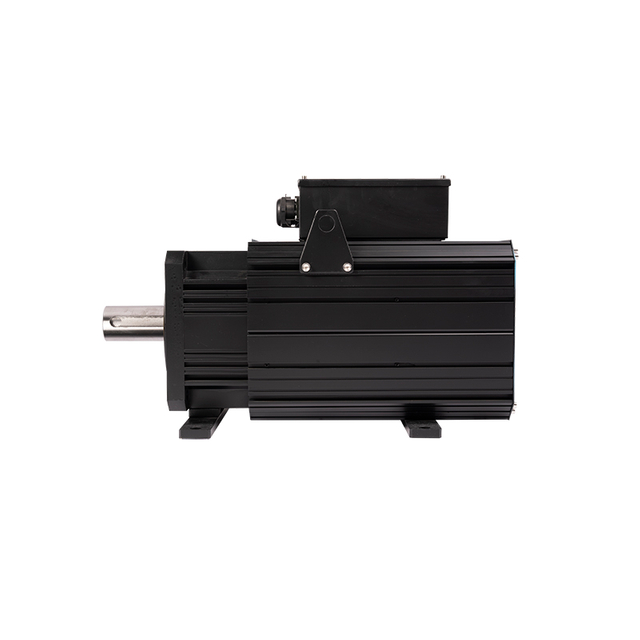
1. Introduction
Have you ever wondered where servo motors are used? From manufacturing to everyday gadgets, their applications are vast.
In this article, we’ll explore the different industries where Servo Electric Motors play a crucial role. You will learn about how these motors enhance precision, performance, and efficiency across various sectors.
2. Industrial Automation
Industry | Application Area | Specific Task/Function |
Robotics | Robotic Arms | Precision movement for assembly, welding, etc. |
CNC Machinery | Milling, Turning, Laser Cutting | High-precision cutting, shaping of materials |
Conveyor Systems | Material Handling | Controlled speed, transport of products |
Automotive Industry | Electric Power Steering | Steering assistance, adaptive response |
Medical Equipment | Surgical Robotics | Precision control in minimally invasive surgeries |
2.1 Robotics and Automation Systems
Servo motors play a pivotal role in industrial robots, particularly in tasks that require precise motion control. These motors are essential in robotic arms that perform operations such as welding, painting, and assembly on production lines. Their high precision ensures that robots can perform repetitive tasks consistently, reducing human error and improving production speed.
Servo motors are also used in automated pick-and-place systems, where they guide the movement of components in assembly lines. This technology allows for faster and more efficient operations, streamlining manufacturing processes.
Tip: When choosing a servo motor for robotic applications, ensure that the motor's torque and speed specifications align with the tasks the robot needs to perform.
2.2 CNC Machinery
In CNC (Computer Numerical Control) machines, servo motors control the movement of the tool along multiple axes. The high accuracy and repeatability of these motors are crucial in ensuring that the machine cuts or shapes materials with minimal deviation from the programmed design.
In milling, turning, and laser cutting machines, servo motors enable precise adjustments to the cutting tool, allowing manufacturers to produce high-quality parts in industries like aerospace, automotive, and electronics.
2.3 Conveyor Systems
Servo motors are also integral to conveyor systems in manufacturing plants, particularly in environments where speed control is essential. For example, servo motors regulate the flow of products in assembly lines, ensuring that items move at a constant speed without stalling or causing bottlenecks.
These motors also improve the overall efficiency of conveyor systems by reducing energy consumption compared to traditional motors.

3. Automotive Industry
Servo motors are crucial in modern vehicles, enhancing safety, comfort, and efficiency. They power key systems such as electric power steering, advanced driver-assistance systems (ADAS), and various components in electric and hybrid vehicles, offering precise control and energy savings.
3.1 Electric Power Steering
Servo motors have become the standard for electric power steering systems in modern vehicles. These systems provide precise control of the steering mechanism, making it easier to steer the vehicle while reducing the amount of effort required from the driver. The ability of servo motors to adjust the steering assist based on vehicle speed adds another layer of safety and comfort.
By using servo motors, manufacturers can create more energy-efficient vehicles, as these systems require less power than traditional hydraulic systems.
3.2 Advanced Driver-Assistance Systems (ADAS)
Servo motors are vital in ADAS, which include features such as automatic lane-keeping, adaptive cruise control, and automated emergency braking. These systems rely on the precise movement of components like steering mechanisms, braking systems, and sensors, all of which are powered by servo motors.
Their role in ensuring high responsiveness and precision underpins the safety and functionality of autonomous and semi-autonomous vehicles.
3.3 Electric and Hybrid Vehicle Components
In electric and hybrid vehicles, servo motors are used to control various components, including HVAC systems, seat adjustments, and power windows. These motors help improve energy efficiency and ensure that critical components function smoothly, even with the lower power output from electric drives.
4. Consumer Electronics
Feature | Impact on Consumer Electronics |
Precision Control | Enables autofocus and lens stabilization in cameras |
Energy Efficiency | Reduces power consumption in home appliances like vacuum cleaners |
Compact Size | Facilitates design of smaller, more portable electronics |
Durability | Ensures long-lasting performance in consumer devices |
4.1 Camera Systems
Servo motors are essential in modern camera systems, particularly in autofocus mechanisms and lens stabilization. These motors adjust the camera lens to achieve the sharpest image possible, even when the camera is moving or when the subject is in motion.
Smartphone cameras, digital cameras, and even surveillance cameras use servo motors to deliver high-quality images and videos, even in challenging conditions like low light or when zooming in on distant subjects.
Tip: When selecting servo motors for camera systems, ensure that the motor's response time and torque capabilities match the requirements for autofocus and stabilization.
4.2 Home Appliances
Servo motors are used in various household devices, from washing machines and refrigerators to air conditioners and robotic vacuums. These motors allow for the precise control of mechanisms like drum rotations in washing machines, airflow in HVAC systems, and navigation in robotic cleaners.
Their small size, energy efficiency, and ability to maintain consistent performance make them ideal for home appliances, which increasingly rely on automation and smart technology.
5. Aerospace and Defense
5.1 Flight Control Systems
In the aerospace industry, servo motors are critical in flight control systems, where they operate flaps, ailerons, rudders, and elevators. These components require constant, precise adjustments to keep the aircraft stable and responsive to pilot commands.
Servo motors ensure smooth operation of these control surfaces, which is essential for both safety and efficiency in flight, especially in turbulent conditions.
5.2 Guidance Systems
Servo motors are also used in defense systems, including missile guidance and radar antenna systems. These motors provide the high precision needed for tracking and targeting, ensuring that military assets can be deployed effectively and accurately.
6. Medical Equipment
6.1 Surgical Robotics
Servo motors are an essential part of robotic surgical systems, which assist surgeons in performing minimally invasive surgeries. These systems use servo motors to control the movement of robotic arms and surgical instruments, allowing for incredibly precise cuts and actions.
With high accuracy, servo motors enable better patient outcomes by minimizing the size of incisions, reducing recovery times, and enhancing the overall precision of surgical procedures.
6.2 Prosthetics and Orthotics
Servo motors are used in prosthetics and orthotic devices, enabling fine control over artificial limbs. These motors allow for smooth and natural movements of prosthetic hands, arms, and legs, giving users greater mobility and independence.
The precision of servo motors in controlling prosthetics ensures that movements such as grasping, walking, and even running feel more lifelike and responsive.
7. Entertainment and Theme Parks
7.1 Motion Simulation
In theme parks, servo motors are used in motion simulators to create realistic, immersive experiences for riders. These simulators are designed to replicate the motion of a vehicle, plane, or other moving object. Servo motors ensure that the movements are smooth and synchronized, providing a lifelike experience that mimics real-world motion.
7.2 Automated Set Design
Servo motors are used in theaters and film sets to automate the movement of props, lighting, and scenery. This technology allows for dynamic changes in the set throughout a performance or production, enhancing the visual experience without requiring manual intervention.
8. Food and Beverage Industry
8.1 Automated Food Processing
Servo motors are utilized in food processing applications, such as in mixers, fillers, and packaging systems. Their precision allows for controlled portioning and consistent quality, whether it’s in filling bottles with liquids or wrapping food products for sale.
In packaging lines, servo motors improve the accuracy and speed of packaging, reducing waste and increasing throughput.
8.2 Bottling and Canning
Servo motors also find applications in the bottling and canning industries, where they control the speed of filling, capping, and labeling machines. By using servo motors, these systems can operate with high efficiency, reducing downtime and ensuring that products are sealed and labeled with minimal error.
9. Conclusion
Servo motors are key to automation and precision. Industries like robotics, automotive, and aerospace rely on them. Shenzhen LAEG Electric Technologies Co.,Ltd. offers servo motors with advanced control and efficiency, helping businesses improve production processes and product quality.
FAQ
Q: What are Servo Electric Motors used for?
A: Servo Electric Motors are used in applications requiring precise control of position, speed, and torque, such as robotics, CNC machinery, automotive systems, and medical equipment.
Q: How do Servo Electric Motors work?
A: Servo motors use a closed-loop control system to adjust their movement, making them ideal for high-precision tasks in industries like automation and robotics.
Q: Why are Servo Electric Motors important in robotics?
A: Servo Electric Motors provide the accuracy and repeatability needed in robotic arms for tasks like welding, assembly, and packaging, improving efficiency in industrial settings.
Q: What industries benefit from Servo Electric Motors?
A: Key industries benefiting from Servo Electric Motors include manufacturing, automotive, aerospace, consumer electronics, and medical devices due to their precise control and energy efficiency.
Q: Are Servo Electric Motors cost-effective?
A: While Servo Electric Motors may have a higher upfront cost, their efficiency, long lifespan, and ability to improve system performance often lead to cost savings in the long term.